
Sur-Ron vs GritShift Parts Quality: 2026 Comparison
Comparing Sur-Ron vs GritShift parts quality? We break down materials, fitment, durability, and warranty so you can decide what to buy.

Table of Contents
- How We Compared Sur-Ron vs GritShift Parts Quality
- Sur-Ron OEM vs Aftermarket Parts: What Actually Differs
- Component-by-Component: Stock Sur-Ron vs GritShift Parts
- Sur-Ron Parts Fitment Guide: Year, Model, and Compatibility
- Best Sur-Ron Upgrades: Where Aftermarket Parts Pay Off
- Sur-Ron Parts Warranty and Customer Support Compared
- Price, Value, and Long-Term Cost of GritShift Parts
- Conclusion: Which Parts Quality Path Fits Your Build
- Frequently Asked Questions
Last Updated: October 7, 2026
How We Compared Sur-Ron vs GritShift Parts Quality
The difference between stock Sur-Ron components and GritShift parts comes down to materials, tolerances, and how each holds up under repeated off-road abuse.
We built this guide around the questions riders actually ask us: does it fit my year and model, will it survive real riding conditions, and is the price difference justified.
A common mistake is assuming all aftermarket parts are automatically better than stock. They are not.
Sur-Ron OEM vs Aftermarket Parts: What Actually Differs
OEM Sur-Ron parts are built to a price point that keeps the complete bike competitive. Aftermarket manufacturers like GritShift design around a narrower goal: fixing the specific weaknesses riders complain about most.
The practical differences fall into three buckets:
- Material grade: Aftermarket suspension and brake components often use stronger alloys and better seals than stock equivalents.
- Tolerances: Tighter machining on aftermarket drivetrain parts means less slop and longer component lifespan.
- Serviceability: Many aftermarket parts are designed to be rebuilt rather than replaced whole.
What most guides miss is that fitment is where aftermarket quality actually gets tested. A part with great materials that does not seat correctly on your specific frame and year will fail faster than a stock part that fits perfectly.
Component-by-Component: Stock Sur-Ron vs GritShift Parts
The clearest way to judge parts quality is to look at individual components rather than the brand as a whole. Some categories reward upgrading; others do not.
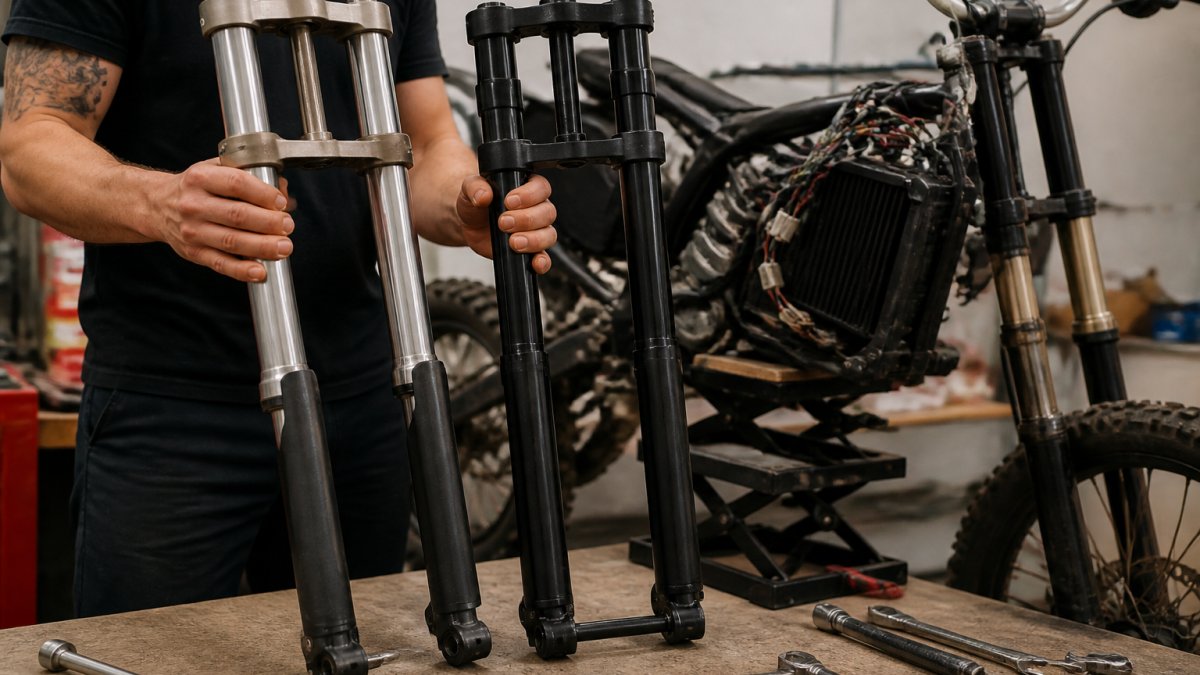
Suspension and Fork Upgrades
Stock Sur-Ron suspension is adequate for casual trail riding but struggles under aggressive off-road use, heavier riders, or repeated high-speed impacts. The stock fork uses a basic damper with limited external adjustment, and the spring rate is set for a lighter-than-average rider.
Aftermarket fork and shock upgrades typically deliver the biggest noticeable improvement per dollar. When you compare them, look at four things:
- Stanchion material and finish: Higher-grade alloy stanchions with a hard anodized finish resist scratching and stiction better than a plain finish, which matters once you are riding in grit and mud.
- Damper design: Adjustable compression and rebound let you tune the fork to your weight and terrain instead of accepting whatever the factory set.
- Seal quality: Serviceable seals mean you can rebuild the fork instead of replacing it, and better seals keep dust out of the damper oil.
A fork that is too stiff or too soft for your build will hurt handling and stability no matter how well it is made. Match the spring rate first, then judge the hardware.
Drivetrain and Brake Components
Drivetrain wear items are where riders feel quality differences fastest. Sprockets, chains, and brake rotors on stock bikes wear predictably, but aftermarket versions often last longer under mud, dust, and repeated hard braking.
Brake upgrades matter most for riders pushing top speed or running supermoto conversions. Better rotors and pads improve consistency when the brakes get hot, which is the difference between a firm lever and a fading one on a long descent.
| Component | Stock Sur-Ron | GritShift Aftermarket | What to Check Before Buying |
|---|---|---|---|
| Suspension fork | Basic damper, limited external adjustment, factory spring rate | Adjustable damping, serviceable seals, weight-matched spring options | Stanchion finish, seal kit availability, spring rate range |
| Rear shock | Fixed or minimally adjustable | Adjustable, rebuildable | Eye-to-eye length, mounting hardware, spring rate |
| Brake rotors | Adequate for trail use | Thicker or better-vented for heat handling | Rotor diameter, bolt pattern, pad compound compatibility |
| Brake pads | Standard compound | Compounds matched to riding style | Bed-in procedure, rotor wear |
| Sprockets and chain | Standard wear rate | Harder material, tighter tolerances | Tooth count, chain pitch, chain line |
| Motor and controller | Reliable, sealed | Tuned for more power | Battery and controller compatibility, thermal limits |
Hardware, Fasteners, and Finishes
This is the part most comparisons skip, and it is where cheap aftermarket parts quietly fail. Look at the bolts, brackets, and finishes on any part before you install it:
- Fastener grade: Higher-grade bolts resist stripping and stretching better than soft hardware, especially on suspension and brake mounts where torque matters.
- Weld quality: Clean, consistent welds on brackets and mounts indicate better process control than lumpy or undercut welds.
- Finish and coating: Anodizing and powder coating resist corrosion, which matters if you ride in wet or salted conditions.
What Most Guides Miss About Fitment
Fitment is where aftermarket quality actually gets tested. A part with great materials that does not seat correctly on your specific frame and year will fail faster than a stock part that fits perfectly. Even within the same model name, mounting points, controller plugs, and hardware can change between model years. That is why a component-by-component comparison only helps if you confirm the part is built for your exact bike before you judge its quality.
Sur-Ron Parts Fitment Guide: Year, Model, and Compatibility
Fitment is the single biggest source of failed upgrades. A part that fits a 2023 Sur-Ron X may not fit an earlier model or a different trim, and the differences are not always obvious from a product listing.
Before ordering any aftermarket part, confirm four things:
- Exact model and year of your bike, not just "Sur-Ron X."
- Mounting points and hardware the part requires.
- Controller and battery compatibility if the part is electrical.
This is where a shop that verifies fitment against your exact bike saves real headaches. At RYVOX, we check every order against the model and year before it ships, which cuts down on the wrong-part cycle that frustrates so many first-time upgraders.
Best Sur-Ron Upgrades: Where Aftermarket Parts Pay Off
Not every upgrade earns its cost. The best Sur-Ron upgrades are the ones that address a real weakness in how you actually ride.
Prioritize in this order:
- Suspension if you ride hard off-road or weigh more than the stock setup was tuned for.
- Brakes if you ride at high speed or convert to supermoto.
- Drivetrain wear items as they wear out, not preemptively.
- Controller and motor upgrades only after the chassis and brakes can handle the extra power.
A common mistake is chasing top speed and acceleration upgrades before the frame, suspension, and brakes are ready for them. More power on a chassis that cannot handle it makes the bike less stable, not more fun.
Sur-Ron Parts Warranty and Customer Support Compared
Warranty and support are where cheap aftermarket parts quietly fail riders. A low price means nothing if a failed component has no replacement path. Most ranking results cover bike models and upgrade advice but skip this entirely, so this is where a direct comparison earns its keep.
When you compare warranty coverage between stock Sur-Ron parts and GritShift parts, ask five concrete questions:
- Who honors the warranty? Does the seller process the claim directly, or push you to the manufacturer and let you wait?
- What is the coverage window? A stated period in months or years is worth more than a vague "lifetime" claim with conditions attached.
- What is excluded? Wear items like brake pads, chains, and sprockets are almost always excluded, and crash damage usually is too. Know this before you buy.
Stock Sur-Ron Warranty Reality
Stock parts carry the manufacturer's warranty through the dealer or seller you bought the bike from. In practice, coverage on wear items is limited, and claims often require you to go through the original point of purchase. That is fine for a bike bought locally, but it gets slower if you bought used or moved.
GritShift Parts Warranty Reality
Aftermarket parts vary widely here, and this is where the seller matters more than the brand. Some sellers stock replacement components and handle claims directly; others act as a pass-through and leave you to chase the manufacturer. The practical difference shows up when something fails: one path gets you a part in days, the other gets you a ticket number.
Returns, Restocking, and Wrong-Part Cycles
The most common return is not a defect. It is a part that does not fit the buyer's exact model year. A seller that verifies fitment before shipping cuts down on that cycle, which saves you the return shipping, the restocking fee, and the two-week wait for the correct part.
Ask about the return window and whether opened or installed parts are eligible. Many sellers will not accept a return once a part has been mounted, which is exactly why fitment verification before shipping matters so much.
Installation Support and Documentation
Good support does not stop at the sale. Look for installation instructions specific to your model, torque specs for mounting hardware, and a way to reach a person who has actually installed the part.
This is where a shop that verifies fitment against your exact bike saves real headaches. At RYVOX, we check every order against the model and year before it ships, which cuts down on the wrong-part cycle that frustrates so many first-time upgraders.
Price, Value, and Long-Term Cost of GritShift Parts
Cheaper is not always less expensive. A part that fails in a few months costs more in the long run than one that lasts seasons.
Value comes down to three factors:
- How long the part lasts under your real riding conditions.
- Whether it is rebuildable instead of disposable.
- Whether the seller backs it with warranty and replacement support.
Pricing on aftermarket parts varies by component and build, so check current pricing on the RYVOX site rather than trusting a number from a forum post.
For riders who want the quality of genuine aftermarket parts without the guesswork, RYVOX offers fitment-verified components and direct access to builders who ride the same bikes.
Conclusion: Which Parts Quality Path Fits Your Build
The right choice depends on how you ride. Riders pushing off-road performance, high-speed stability, or a supermoto conversion will feel the difference in aftermarket suspension, brakes, and drivetrain parts almost immediately.
RYVOX stocks only genuine, tested components, verifies fitment against your exact model and year, and backs every part with valid warranty support. Whether you need suspension upgrades, brake components, or a full performance build, we help you get the right parts the first time.
Frequently Asked Questions
Are GritShift parts good quality for a Sur-Ron?
GritShift parts are generally considered a step up from stock Sur-Ron components for riders who push their bikes hard. Their suspension and drivetrain parts use stronger materials and tighter tolerances than OEM in many cases. That said, quality varies by product line, so check whether the specific part is designed for your model year and riding style. For aggressive off-road or supermoto use, GritShift parts are a reasonable upgrade path. For casual trail riding, stock parts often hold up fine.
Do GritShift parts fit the Sur-Ron Light Bee X?
Many GritShift parts are designed specifically for the Light Bee X platform, but fitment depends on the model year and the specific component. Sur-Ron made running changes to frame mounts, brake calipers, and suspension geometry across model years, so a part that fits a 2021 Light Bee X may not bolt onto a 2023 without modification. Before ordering, confirm the part number against your exact year and model. A fitment check from a dealer that verifies against your VIN or model code prevents returns and wasted install time.
Are OEM Sur-Ron parts more reliable than aftermarket parts?
OEM Sur-Ron parts are built to the factory specification, which means consistent fitment and predictable wear. Aftermarket parts from brands like GritShift often exceed OEM specs in strength or adjustability, but quality depends on the manufacturer. A well-made aftermarket fork or brake rotor can outlast stock. A cheap unbranded part from an unknown seller often fails early. The deciding factor is not OEM vs aftermarket, it is whether the part was engineered and tested for your specific bike and riding conditions.
What should you check before buying used Sur-Ron parts?
Inspect the part for cracks, stripped threads, and uneven wear on mating surfaces. Ask the seller for the model year the part came off and confirm it matches your bike. For electrical components like controllers and batteries, check for water intrusion, swollen cells, or burnt connectors. Request photos of the actual part, not stock images. If the seller cannot confirm fitment or provide the original part number, walk away. Used suspension and brake parts are especially risky because internal wear is hard to see.