
How to Avoid Fake Electric Dirt Bike Parts: 2026 Guide
Learn how to avoid fake electric dirt bike parts with serial number checks, visual inspection tips, safe payment methods, and warranty validation steps.

Table of Contents
- Why Fake Electric Dirt Bike Parts Are a Growing Problem
- Risks of Cheap Electric Dirt Bike Aftermarket Parts
- How to Verify Electric Dirt Bike Controller Authenticity
- Electric Dirt Bike Battery Safety Standards to Check Before Buying
- Visual Inspection and Serial Number Verification
- Safe Payment Methods and Authorized Dealer Checks
- How to Avoid Fake Electric Dirt Bike Parts: A Pre-Purchase Checklist
- Conclusion
- Frequently Asked Questions
Last Updated: October 4, 2026
Why Fake Electric Dirt Bike Parts Are a Growing Problem
The electric dirt bike market has exploded, and so has the market for fake parts. Counterfeit components are everywhere online, and they look almost identical to the real thing.
Here is the core issue: electric dirt bike components are expensive, and demand is high. That gap attracts sellers who cut corners.
A few things drive the problem:
- Popular models like Sur-Ron and Talaria use proprietary components that are hard to source
- Third-party sellers can list parts with no proof of authenticity
- Buyers often shop on price alone, which rewards the fakes
The good news? Counterfeits leave clues. This guide shows you exactly what to check before you buy.
Risks of Cheap Electric Dirt Bike Aftermarket Parts
Cheap parts are not just a bad deal. They are a safety risk. The two biggest dangers are battery fires and controller failures, and both can put you on the ground.
Fire and Battery Hazards
Battery packs are the most dangerous part to buy fake. A counterfeit pack often skips the battery management system, the circuit that stops cells from overcharging. Without it, cells can overheat and catch fire. A common mistake is trusting a listing that says "high capacity" with no safety data behind it.
Controller Failures and Riding Danger
A fake controller can fail mid-ride. When the throttle signal cuts out on a climb or a jump, you lose power with no warning. The real difference between a genuine controller and a fake comes down to the firmware and the internal components, both of which are invisible until it fails.
How to Verify Electric Dirt Bike Controller Authenticity
Verifying electric dirt bike controller authenticity means checking the hardware, the firmware, and the seller, not just the listing photos. A genuine controller will match your bike's exact model and year, and the seller should confirm that fitment in writing.
Key checks for any controller:
- Confirm the part number matches your motor and battery voltage
- Ask whether the firmware is locked or open, since locked firmware signals an OEM part
- Check that the connector style matches your existing wiring harness
Controller compatibility is where most online orders go wrong. Two controllers can look identical and still not work together. That is why we verify every unit against the exact model and year before it ships.
Electric Dirt Bike Battery Safety Standards to Check Before Buying
Electric dirt bike battery safety standards exist to keep packs from failing, and a legitimate seller will confirm which ones a pack meets. If a listing cannot tell you what standard the battery was tested to, treat that as a red flag.
What to look for:
- A visible certification label on the pack itself
- A stated battery management system with overcharge and short-circuit protection
- A serial number you can trace back to the maker
The U.S. Consumer Product Safety Commission guidance on lithium battery safety explains why uncertified packs are a fire risk. Consumer protection rules also apply here, so a seller who hides this info is worth avoiding.
Visual Inspection and Serial Number Verification
Visual inspection and serial number verification are the fastest ways to spot a fake before you install it.
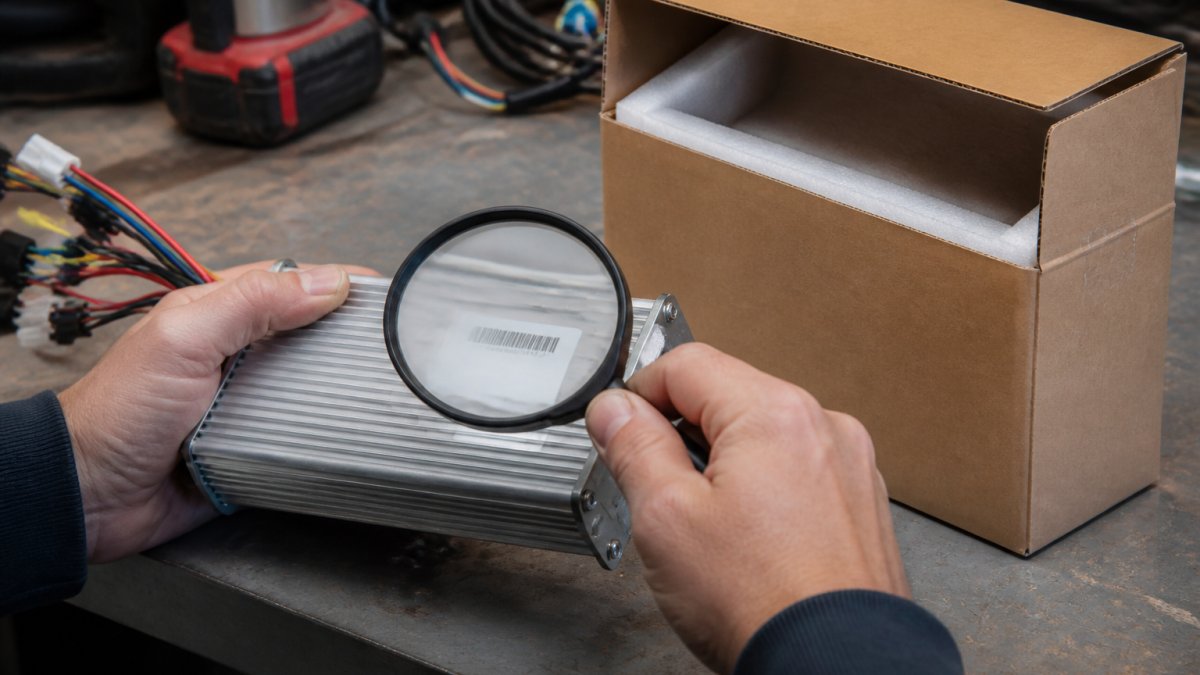
Start with the label. Then check the serial number against the maker's records.
- Look for blurry print, misspelled brand names, or mismatched fonts
- Check that the serial number is stamped or printed cleanly, not peeling
- Compare the packaging to photos from the authorized dealer
- Weigh the part if you can, since counterfeits often use lighter materials
How to Actually Verify a Serial Number
Most guides stop at "check the serial number." That is the easy part. The hard part is confirming it is real, and that is where counterfeiters get caught.
A serial number is only useful if it can be traced. Here is the workflow that works:
- Photograph the label before you install anything. Once a part is mounted, the label is often obscured or damaged, and you lose your only proof of purchase identity.
- Locate the manufacturer's contact channel. For most electric dirt bike brands, that is a support email, a dealer portal, or a warranty registration page. Some brands publish a serial-number lookup tool; others require you to email support directly.
- Send the serial number, the model number, and a photo of the label. Ask the manufacturer to confirm the part was produced for your specific model and year. A genuine OEM serial will return a match. A counterfeit serial usually returns nothing, or a match to a different product line.
- Save the reply. If the part later fails, that email is your evidence in a chargeback or warranty dispute.
A common pattern is that counterfeiters reuse the same serial number across hundreds of units. If a seller cannot tell you why two different listings share a serial, that is your answer.
Maxima Contact Cleaner (17 oz) →
Firmware and Software Locking
This is the check almost no buying guide covers, and it is the one that matters most to DIY builders. Many modern electric dirt bike controllers and displays are locked to a specific manufacturer's firmware.
Ask the seller two questions before you buy:
- Is the firmware locked or open?
- Will this controller pair with my existing display and BMS?
If the seller cannot answer, assume it is locked. A locked OEM controller is not a bad part, but it is the wrong part if you plan to modify your build.
Third-Party Pre-Purchase Inspections
If you are buying a high-value component locally, many independent bike shops will perform a pre-purchase inspection for a bench fee. They can check connector pinouts, measure internal resistance, and confirm the part matches the model it claims to be. This is not a certification of authenticity, but it catches obvious clones before money changes hands. Call ahead and ask whether the shop services the brand in question, since not every shop works on proprietary electric dirt bike systems.
Packaging and Label Red Flags
Packaging tells you a lot. Genuine parts ship in branded boxes with clear model numbers. Counterfeits often arrive in plain bags or generic boxes with no brand at all.
Watch for these:
- No brand name anywhere on the box
- Model numbers that do not match your bike
- Missing warranty card or contact info
- Cheap, flimsy packaging for a high-value part
Safe Payment Methods and Authorized Dealer Checks
Safe payment methods protect your money when a part turns out to be fake. The rule is simple: pay with a method that gives you a documented dispute process. Everything else is a gamble.
How Each Payment Method Actually Protects You
Not all "safe" methods are equal. Here is how the main options compare when a part arrives counterfeit or never arrives at all.
- Credit card. The strongest protection for high-ticket parts. Under the Fair Credit Billing Act, you can dispute a charge for goods that were not delivered as described, and the card issuer investigates. Most issuers let you file a dispute online, and the process typically runs for weeks, not days. This is the default choice for any part over a few hundred dollars.
- Debit card. Weaker than credit. The money leaves your account immediately, and while banks offer dispute processes, your funds may be tied up while the investigation runs. Use credit instead when you can.
- PayPal Goods and Services. Offers buyer protection with a defined dispute window and a structured resolution process. Do not use "Friends and Family" for a purchase, because that removes the protection entirely.
- Marketplace buyer protection. Platforms like eBay and Amazon have their own claims processes. They work, but they depend on the seller still being on the platform when you file. Screenshot the listing and the seller's storefront the day you buy.
A common pattern in counterfeit listings is a seller who accepts credit cards for small items to build feedback, then pushes wire transfer for the expensive controller or battery. Treat that shift as a red flag on its own.
Authorized Dealer Checks
Buying from an authorized dealer is the other half of the defense. An authorized dealer buys straight from the brand, so the supply chain stays transparent.
- Confirm the seller is listed as an authorized dealer for the brand
- Ask about the warranty in writing before you buy
- Check the return policy for failed parts
- Prefer sellers who confirm fitment before shipping
Pre-Purchase Inspections as a Payment Condition
If you are buying a used or locally listed component, you can make a bench inspection a condition of payment. Many independent bike shops will check a controller or battery for a fee, and some mobile mechanics will do it at your location. The practical move is to agree with the seller that payment releases only after the shop confirms the part matches its claimed model and shows no signs of tampering.
How to Avoid Fake Electric Dirt Bike Parts: A Pre-Purchase Checklist
Use this checklist every time you buy a component online. It takes two minutes and saves you from a failed part and a wasted ride.
| Check | What to Look For | Red Flag |
|---|---|---|
| Seller | Listed authorized dealer | No brand affiliation |
| Price | Matches dealer pricing | Far below market |
| Serial number | Traceable, clean print | Missing or blurry |
| Packaging | Branded box, model match | Plain bag, no label |
| Payment | Credit card, buyer protection | Wire transfer, gift cards |
| Fitment | Confirmed for your model | "Fits most bikes" |
| Warranty | Stated in writing | No warranty offered |
The Federal Trade Commission guide to online shopping scams covers the warning signs of fraudulent listings. When a deal looks too good, it usually is.
At RYVOX, every part is checked against your exact model and year before it ships. For example, our Wheel Hub Bearings are replacements we confirm fitment on before they leave the shop, and our Fork Headset Bearings come with the same verification.


Conclusion
Fake parts are a real threat, and the stakes are higher than a wasted order. A counterfeit battery or controller can fail on the trail and put you in danger. RYVOX was built to remove that risk. We verify fitment against your exact model and year before anything ships.
Frequently Asked Questions
What are the common signs of counterfeit electric dirt bike components?
Common signs include misspelled brand names, missing serial numbers, flimsy packaging, and prices that are far below market. Counterfeit controllers often lack firmware locking and may not match the listed technical specifications. Check for a valid warranty card and verify the seller is an authorized dealer. If the deal seems too good, it probably is.
How can I verify if an electric dirt bike part is from an authorized dealer?
Ask the seller for their dealer authorization or check the brand's official website for a dealer locator. An authorized dealer can provide genuine part numbers and warranty validation. You can also request a receipt that includes the part's serial number and brand logo. Avoid sellers who cannot confirm their dealer status or provide proper documentation.
Are aftermarket parts from third-party marketplaces usually fake?
Not all, but the risk is higher. Third-party marketplaces like eBay or AliExpress host many counterfeit or low-quality parts. Look for sellers with high ratings, detailed product photos, and clear return policies. Even then, verify the part's authenticity using serial numbers and visual inspection. Buying from an authorized dealer remains the safest option.
Why is it dangerous to use non-certified electric dirt bike batteries or controllers?
Non-certified batteries and controllers can lack proper battery management systems, leading to overheating, fires, or explosions. They may also fail suddenly while riding, causing loss of control. Certifications like UL 2849 ensure the product meets safety standards. Always check for a certification mark and avoid unbranded or suspiciously cheap components.