
Electric Dirt Bike Warranty Coverage Explained
Understand electric dirt bike warranty coverage, what's included, exclusions, battery protection, and how to file claims. A practical guide for riders.

Table of Contents
- What an Electric Dirt Bike Warranty Covers
- Electric Dirt Bike Battery Warranty Coverage
- Coverage Duration and Warranty Periods
- Electric Dirt Bike Warranty Exclusions and Limitations
- Electric Dirt Bike Warranty After Modifications
- Electric Dirt Bike Warranty Claim Process
- Warranty Registration, Transferability, and Consumer Rights
- Frequently Asked Questions
Last Updated: October 11, 2026
What an Electric Dirt Bike Warranty Covers
An electric dirt bike warranty is your protection against manufacturing defects and component failures. Understanding what's covered, and what isn't, prevents costly surprises when something breaks. Most manufacturers cover defects in materials and workmanship for a set period, but the specifics vary widely by brand and component type.
Manufacturing Defects in Materials and Workmanship
Manufacturing defects are flaws that happen during production, not from how you use the bike. A cracked frame, faulty welds, or a motor that fails prematurely due to poor assembly all fall under this category.
What this means in practice: if your frame cracks without impact, that's covered. If you crash and crack the frame, it's not.
Documentation matters here. Keep your proof of purchase and any receipts from assembly or setup.
Motor and Controller Protection
The motor and controller are the heart of an electric dirt bike. Most warranties cover these components separately because they're complex systems prone to specific failure modes. A motor that won't spin, a controller that cuts power unexpectedly, or electrical connections that fail are all manufacturing defects.
Motor coverage typically lasts 12-24 months. Controllers often have the same timeline. But here's what most riders miss: if you modify the controller's settings or bypass safety features, you void coverage. Stick to stock settings and you're protected. Push the limits and you're on your own.
Electrical Components and Frame
Fuses, connectors, wiring harnesses, and the frame itself all carry warranty protection. A corroded connector or a frame that's faulty from the factory gets replaced. The frame warranty is especially important because it's the structural backbone of your bike.
Frame coverage typically matches the overall warranty period. If the frame fails due to a manufacturing defect within that window, most brands will replace it. Impact damage and crashes are not covered.
Electric Dirt Bike Battery Warranty Coverage
The battery is often the most expensive component on an electric dirt bike. Battery warranties are handled separately from the rest of the bike because they degrade over time naturally. Understanding what's covered protects your investment.
Battery Defects and Replacement Timelines
A battery with a manufacturing defect, cells that fail prematurely, pack that won't charge, or internal faults, is covered under warranty. Most brands cover battery defects for 12 months. Some extend to 24 months for higher-end models.
Replacement timelines vary. Some manufacturers ship a new pack immediately. Others repair your existing pack if possible. Check your specific warranty terms because the process affects downtime and your riding schedule.
What voids battery coverage: water damage, physical damage from crashes, and overcharging with non-approved chargers. If you submerge the bike or charge with a sketchy third-party charger and the battery dies, that's on you.
Battery Degradation and Capacity Loss
Here's the reality: all lithium batteries lose capacity over time. A battery that held 100% charge when new might hold 80% after 500 charge cycles. This is normal wear and tear, not a defect. Warranties don't cover capacity loss from normal use.
Most warranties kick in only when capacity drops below a specific threshold, often 70-80% of original capacity, and only within the warranty period. After that window closes, degradation is your responsibility. This is why battery lifespan matters when you're evaluating a bike's total cost.
Coverage Duration and Warranty Periods
Different components have different coverage windows. Knowing these timelines helps you plan maintenance and repairs.
Standard Warranty Lengths by Component
Most manufacturers use a tiered approach:
- Motor: 12-24 months
- Controller: 12-24 months
- Battery: 12-24 months (sometimes longer)
- Frame: 12-24 months
- Electrical components: 12-24 months
- Wear items: Not covered (brake pads, tires, cables)
Some brands extend coverage on premium models. A high-end electric dirt bike might offer 24-36 months on the motor and battery. Budget models might stop at 12 months across the board.
The clock starts at purchase date, not first ride. If you buy a bike in January and don't ride it until March, your warranty still expires in January of the following year. This matters if you're buying off-season.
Extended Warranty Options
Extended warranties push coverage beyond the standard period. A battery extended warranty might cover you for 36 months instead of 24. Motor coverage might extend to 36 months as well.
Extended warranties cost extra, typically a percentage of the bike's price. Whether they're worth it depends on your riding intensity and how long you plan to keep the bike. Heavy riders who plan to own the bike for years benefit more than casual riders.
Electric Dirt Bike Warranty Exclusions and Limitations
What's not covered matters as much as what is. These exclusions protect manufacturers from abuse while keeping costs reasonable.
Wear Items and Normal Wear and Tear
Brake pads, tires, chains, cables, and grips wear out. These are consumables. No manufacturer covers them under warranty because they're expected to be replaced. Treat wear items as maintenance expenses, not warranty claims.
Normal wear and tear on paint, plastic shrouds, and decals also isn't covered. A scratch from a branch or paint fading from sun exposure is cosmetic wear. Cosmetic damage doesn't trigger warranty claims.
The line between defect and wear is sometimes blurry. A brake cable that snaps after 10 rides might be a defect. A cable that snaps after 500 rides is wear.
User Damage, Misuse, and Off-Road Use
How a warranty treats mud, sand, water crossings and rough terrain is set by each manufacturer, so read your bike's terms. Crashes, impacts and abuse are not covered.
Dropping the bike, hitting a rock hard enough to crack something, or riding through water deeper than the bike is rated for all count as user damage. These failures aren't manufacturer defects, they're consequences of how you ride.
Misuse includes modifying the bike in ways that stress components beyond their design. Removing the speed limiter, installing a controller from a different manufacturer, or adding weight that exceeds the frame rating all fall into this category.
Electric Dirt Bike Warranty After Modifications
Aftermarket parts are tempting. New suspension, upgraded controllers, custom wheels, they make your bike unique. But modifications can complicate warranty coverage.
How Aftermarket Parts Affect Coverage
Adding third-party parts doesn't automatically void your entire warranty. The manufacturer still covers original components for defects. But if an aftermarket part causes damage to a covered component, that damage isn't covered.
Example: you install an aftermarket controller. If the controller fails, that's not covered because it's not the original part.
Not sure whether a part fits your exact model and year, or how it could affect your coverage? Text the shop before you order.
Third-Party Repair and Service Impact
Having a shop other than the manufacturer service your bike doesn't automatically void coverage. But if that service causes a problem, the manufacturer might not cover the resulting failure. This is where documentation matters.
Keep records of all service work. Photos of what was done, receipts from the shop, and notes about what was replaced all help if a warranty dispute arises. If a third-party shop damages something during service, that shop's liability insurance should cover it, not the manufacturer's warranty.
Electric Dirt Bike Warranty Claim Process
When something fails, knowing how to file a claim speeds up the process and increases your chances of approval.
Proof of Purchase and Documentation Requirements
You need proof of purchase to file a warranty claim. A receipt, invoice, or order confirmation works. Without it, the manufacturer can't verify you own the bike or when you bought it.
Documentation should include:
- Original proof of purchase with date
- Photos of the failed component
- Description of what happened and when
- Service records if applicable
- Your contact information
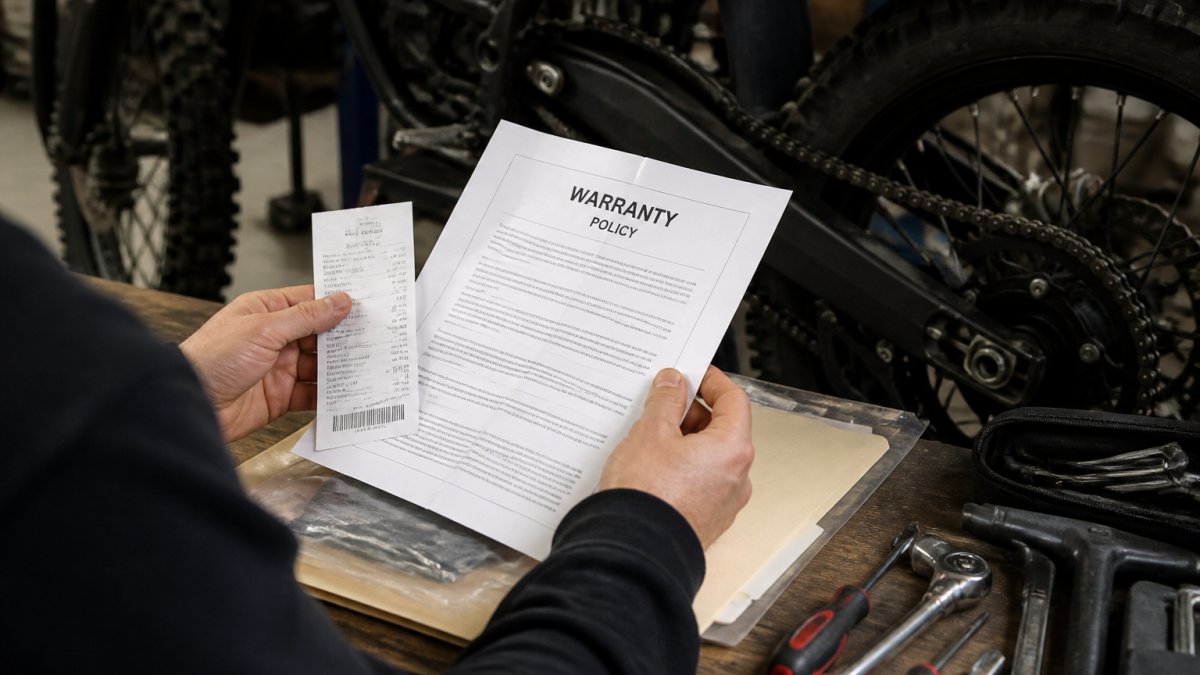
Keep these documents organized. Digital copies work.
Filing Your Claim and What to Expect
Contact the manufacturer with your proof of purchase and documentation. Most brands have an online claim form or email address for warranty requests. Include clear photos showing the failure.
The manufacturer will review your claim and determine if it's covered. This usually takes 5-10 business days. If approved, they'll either ship a replacement part or provide repair instructions. If denied, they'll explain why.
Shipping is usually covered for approved claims, but confirm this with the manufacturer. Some brands ship prepaid labels. Others require you to ship first and reimburse you after approval.
Warranty Registration, Transferability, and Consumer Rights
Details about registration, ownership transfer, and your legal protections matter when you're investing in an expensive bike.
Registering Your Warranty
Some manufacturers require warranty registration to activate coverage. Others cover you automatically from purchase. Check your warranty documents to see if registration is required.
Registration is usually free and takes minutes online. You'll enter your bike's serial number, purchase date, and contact information. This ties your warranty to your ownership record and ensures the manufacturer can reach you if there's a recall.
If you buy a used bike, ask the previous owner if they registered it. Some manufacturers allow warranty transfer to new owners, but only if the original registration is on file. Without it, you might lose coverage.
Transferring Warranty to a New Owner
Warranty transferability varies by manufacturer. Some warranties are tied to the original owner only. Others transfer to a second owner automatically. A few require paperwork to transfer.
Check your warranty documents or contact the manufacturer before selling your bike. If the warranty transfers, it increases your bike's resale value.
Protecting your electric dirt bike investment starts with understanding your warranty.
Where a bike we sell carries a manufacturer warranty, it's printed on that bike's page. We're a service shop, so claims get handled on a lift here, not by email.
Frequently Asked Questions
What does an electric dirt bike warranty usually cover?
Most electric dirt bike warranties cover manufacturing defects in materials and workmanship, including the motor, controller, battery, frame, and electrical components like brake cables and fuses. Coverage typically lasts 12 months from the date of purchase, though battery coverage may extend longer. The warranty protects against defects that prevent normal operation, not damage from misuse, accidents, or wear and tear. Always check your specific manufacturer's terms, as coverage varies by brand and model.
Does modifying an electric dirt bike void its warranty?
Modifications can void warranty coverage, depending on what you change and your manufacturer's terms. Installing third-party controllers, batteries, or electrical components may invalidate coverage for those parts or related systems. However, cosmetic upgrades and genuine OEM parts typically don't affect warranty status. If you're considering modifications, contact your dealer or manufacturer first, shops like RYVOX can verify fitment and advise on specific upgrades for your exact model and year.
How do you file an electric dirt bike warranty claim?
To file a claim, gather your proof of purchase (receipt or invoice), warranty registration documents, and photos or video showing the defect. Contact your manufacturer or authorized dealer with details about the issue and when it occurred. Most manufacturers require you to submit the claim within a set timeframe (typically 30 days). They'll assess whether the problem qualifies as a manufacturing defect. If approved, they'll repair or replace the component at no cost. Keep all documentation organized and respond promptly to any requests for additional information.
What is not covered by an electric dirt bike warranty?
Warranties exclude normal wear and tear (brake pads, tires, chains), user damage from accidents or misuse, and damage from riding in conditions beyond the bike's design (extreme water crossings, jumping if not designed for it). Third-party repairs void coverage for affected components. Modifications with non-genuine parts typically aren't covered. Cosmetic damage, corrosion from neglect, and battery capacity loss beyond manufacturer specifications are also excluded. Off-road use exclusions vary by brand, some fully cover off-road riding, while others limit coverage or exclude certain damage types related to extreme terrain.