
Which drivetrain upgrades boost Ultra Bee performance most?
Learn which Ultra Bee drivetrain upgrades deliver real performance gains. Compare belt, chain, sprocket and motor adjuster options with installation tips.

Last Updated: October 24, 2026
Quick Summary
Ultra Bee drivetrain upgrades like the Gates GT4 belt, Warp 9 EK 520 chain, and Warp 9 sprocket unlock real performance gains by eliminating belt slippage, chain stretch, and worn components that waste power and reduce reliability under high output.
- The Gates GT4 Power Grip Belt is US-made ethylene elastomer designed to handle high-power builds without slipping.
- The Warp 9 EK 520 MX Chain is a non-sealed roller chain that requires frequent inspection and lubrication for off-road use.
- Proper chain tension at roughly 1/2 inch of play prevents slipping, skipping, and premature wear on sprockets and the motor.
- Rear sprocket tooth count changes the drive ratio and directly affects acceleration, top speed, motor heat, and range.
- The Warp 9 Ultra Bee Motor Adjuster replaces the stock plastic part with a captive bolt design for reliable tension adjustment.
Table of Contents
- Why drivetrain upgrades matter for Ultra Bee performance
- Belt upgrades: Gates GT4 vs. Starwheel carbon
- Ultra Bee sprocket upgrade options and gearing trade-offs
- Ultra Bee chain upgrade and chain tension setup
- Essential Ultra Bee drivetrain parts and alignment
- Motor adjuster and support components
- Upgrading your Ultra Bee drivetrain: what to do first
- Frequently Asked Questions
Why drivetrain upgrades matter for Ultra Bee performance
The stock drivetrain on an Ultra Bee handles moderate riding well enough, but Ultra Bee drivetrain upgrades unlock real performance gains. But the moment you push power or log serious trail hours, the factory components start showing their limits.
The drivetrain is where power actually reaches the ground. A high-output motor means nothing if the belt can't grip, the chain won't stay tight, or the motor shifts under load.
Strategic upgrades to your Ultra Bee drivetrain can fix common problems and unlock real performance gains. Here's what actually matters, and what to prioritize first.
Belt upgrades: Gates GT4 vs. Starwheel carbon
Your belt is the first point of failure under high power.
The Gates GT4 Power Grip Belt and the Starwheel Carbon Belt are both genuine parts designed specifically for the Ultra Bee's pulley geometry.

The Gates GT4 is a high-torque synchronous belt with optimized tooth shape and ethylene elastomer construction for durability.
Choose the Gates GT4 if you want proven, long-lasting performance under sustained high power. Choose the Starwheel if you prefer a carbon-reinforced option.
Watch out: A loose belt will slip before it breaks, wasting power and heating up. Proper tension is critical, check it after your first few rides.
| Belt | Material | Best For | Key Advantage |
|---|---|---|---|
| Gates GT4 | Ethylene elastomer | High-power builds | US-made, proven durability |
| Starwheel Carbon | Carbon-reinforced | Riders wanting carbon upgrades | Lighter, reinforced construction |
Ultra Bee sprocket upgrade options and gearing trade-offs
Your rear sprocket sets the final drive ratio, how many times the motor turns for each rotation of the rear wheel. Change the tooth count and you change acceleration, top speed, climbing ability, and how hard the motor and controller work, all at once. This is the single most consequential drivetrain decision you can make, and most riders never touch it.
The Warp 9 Ultra Bee Sprocket Aluminum is made from 7075-T6 aluminum and is listed for the 520 OEM chain size. Aluminum is lighter than steel and sheds heat faster, which matters when you are holding high power for long climbs or repeated hard launches.

How ratio changes actually behave
Gearing math is simple division. Divide the rear sprocket tooth count by the front pulley or sprocket tooth count and you get the drive ratio. A larger rear sprocket raises the ratio: the motor spins more times per wheel turn, so torque at the wheel goes up and top speed goes down.
The practical consequences are what matter:
- Going up a few teeth in the rear raises the ratio. You get stronger off-the-line response and better low-speed control on technical climbs, but the motor spins faster at any given trail speed, which raises heat and draws more current. Top speed drops proportionally.
- Going down a few teeth in the rear lowers the ratio. Top speed rises and the motor turns slower at cruise, which can help range on open, fast terrain, but acceleration softens and the motor and controller see higher load per launch, especially on climbs or in soft ground.
- Big jumps in either direction change chain length requirements. A rear sprocket that is several teeth larger usually needs a longer chain; several teeth smaller can leave you with too much slack to adjust out. Plan the chain around the sprocket, not the other way around.
A common mistake is assuming a smaller rear sprocket always means "faster." It means higher potential top speed, but the motor has to work harder to get there, which drains range and stresses the drivetrain. On a high-output controller, that extra load shows up as heat and faster wear.
Matching gearing to how you ride
- Technical trails and steep climbs: favor a higher ratio. The stronger torque multiplication lets the motor pull without bogging, and you spend less time at full throttle fighting gravity.
- Open fast terrain and fire roads: favor a lower ratio. The motor turns slower at speed, which reduces heat and can stretch range.
- Mixed riding: stay close to the stock tooth count. It is the compromise the bike was built around, and small changes are easier to live with than big ones.
If you are unsure which tooth count suits your setup, check the product page for the Warp 9 Ultra Bee Sprocket Aluminum and confirm the listed fitment for your model and year before ordering. Gearing is easy to change and easy to get wrong, pick the ratio for the terrain you actually ride.
Ultra Bee chain upgrade and chain tension setup
Your chain transfers power from the sprocket to the rear wheel. A worn, dry, or loose chain kills efficiency and accelerates wear on the sprocket and the rest of the drivetrain. Under upgraded power, the chain becomes a maintenance item you check often, not a set-and-forget part.
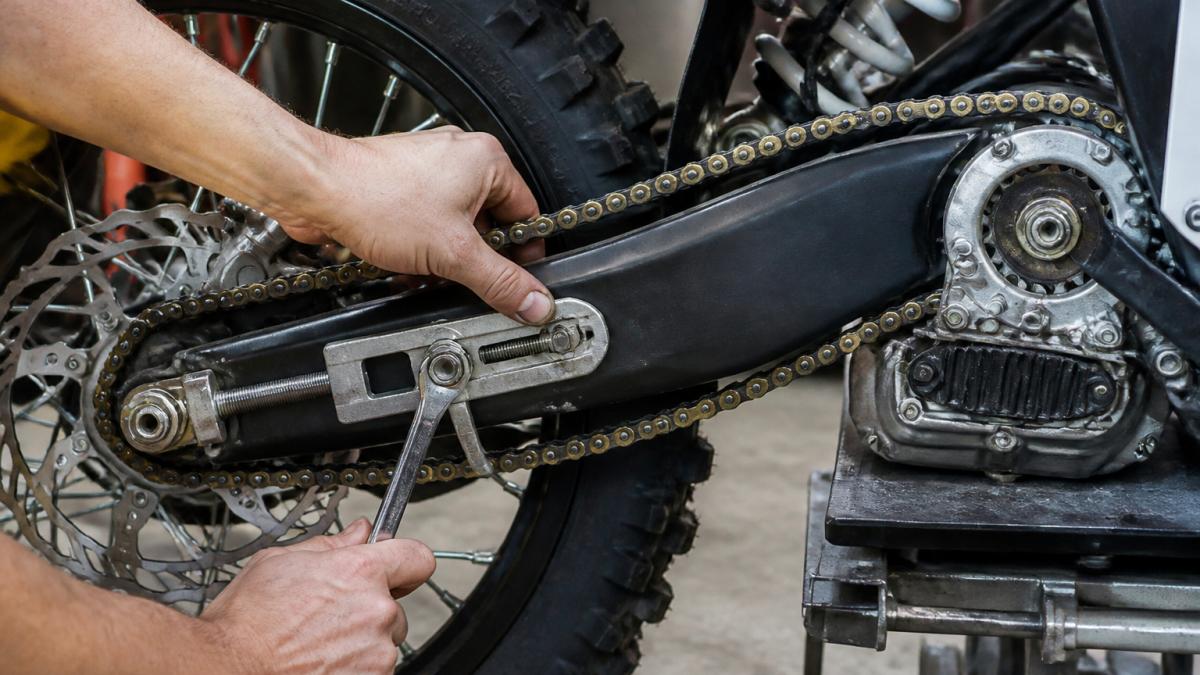
The Warp 9 EK 520 MX Chain is a non-sealed standard roller chain with gold outer plates and black inner pivot links. It includes a clip-style master link and quad-stake riveting. Non-sealed chains are simple to inspect and clean, which suits off-road use where grit and mud are constant.

Choosing the right chain for your setup
A 520 pitch chain is the OEM standard. If you are running a stock or mildly modified drivetrain, stay with 520. The Warp 9 EK chain is genuine Warp 9 Racing hardware. Match chain length to your sprocket choice: a larger rear sprocket usually needs a longer chain, and a smaller one can leave excess slack that the adjuster cannot take up.
Setting chain tension correctly
Chain tension is where most riders go wrong. Too loose and the chain slaps, wears fast, and can skip under power. Too tight and you stress the motor bearings and shorten chain life. The sweet spot is roughly 1/2 inch of play at the midpoint of the lower run, measured with the bike settled and the rear wheel on the ground.
Gates GT4 Power Grip Belt - Surron Ultra Bee →
Adjustment procedure:
- Loosen the rear axle and the motor adjuster lock nut.
- Turn the adjuster to move the motor back or forward until you hit the target play at the lower-run midpoint.
- Confirm the rear wheel is straight and the chain runs true through the sprocket.
- Torque the axle and lock nut to spec, then recheck play, tightening can pull the motor slightly.
- Spin the rear wheel by hand and watch the chain track. It should run centered on the sprocket teeth with no side-to-side wander.
The Warp 9 Ultra Bee Motor Adjuster makes this far easier than the stock plastic part. Its captive bolt design pulls the motor back smoothly, and the locking nut is 4x longer than stock, so a box wrench holds it securely while you set tension.
Wear inspection and maintenance intervals
- After every ride: wipe the chain, check for grit, and look for kinks or stiff links.
- Every few rides on a new chain: check tension. Chains stretch as they break in, and you will need to adjust more often in the first sessions.
- Monthly or every several rides: measure chain stretch. A chain that has stretched past the wear limit will chew through sprocket teeth quickly, so replace it before the sprocket pays the price.
- At every adjustment: inspect sprocket teeth for hooking, rounding, or burring. Worn teeth accelerate chain wear and vice versa.
Chain condition and belt condition are linked. A sloppy chain loads the motor unevenly, which shows up as belt slip and pulley wear. Keep tension dialed in and both last longer.
Essential Ultra Bee drivetrain parts and alignment
Beyond the belt and chain, a few supporting components keep everything working together. Proper alignment is the foundation of drivetrain reliability.
The motor pulley, rear pulley, and jackshaft (mid shaft) need to be perfectly aligned. If they're off, the belt won't track straight, it'll wear unevenly, and power transfer becomes sloppy.
The Surron Ultra Bee Mid Shaft Bushing allows the mid shaft to rotate smoothly while maintaining alignment under load. Two bushings are required per bike.
For riders running serious power, the EBMX Competition Axle & Axle Blocks upgrade your rear axle to titanium with precision adjustable blocks.
Motor adjuster and support components
The motor adjuster is what lets you change belt or chain tension without removing the motor. The stock plastic adjuster works until it doesn't, usually when you need it most.
The Warp 9 Ultra Bee Motor Adjuster replaces the OEM plastic part with a captive bolt design that pulls the motor back smoothly. The upgraded locking nut is 4x longer than stock, making adjustments with a box wrench simple and reliable.
If you're running high power or planning to swap belts or chains regularly, this upgrade can offer convenience and reliability.
Upgrading your Ultra Bee drivetrain: what to do first
Prioritize based on what you're actually running and what problems you're seeing.
If your bike is stock or mildly modified, start with a belt upgrade. The OEM belt is the most common failure point.
If you're running a high-output controller or motor, add a chain upgrade next. A quality 520 chain like the Warp 9 EK handles the torque without stretching or slipping.
From there, consider sprocket changes if you want to tune your acceleration or top-speed characteristics. But don't overthink it, most riders are happy with stock gearing.
The real difference between a reliable drivetrain and one that fails comes down to quality parts and keeping tension tight.
Frequently Asked Questions
What are the best drivetrain upgrades for the Ultra Bee?
The most impactful upgrades target the belt, chain, sprocket, and motor alignment. A Gates GT4 belt improves durability and reduces friction. Upgrading to a quality 520 chain with a compatible sprocket gives you control over acceleration and top speed. A motor adjuster simplifies maintenance and keeps tension precise. Start with whichever component shows wear first, then build from there based on your riding style.
How does Ultra Bee sprocket upgrade affect acceleration and speed?
Sprocket size changes your gear ratio. A smaller rear sprocket increases acceleration but lowers top speed. A larger rear sprocket does the opposite: higher top speed, slower acceleration. Most riders upgrading to aluminum sprockets choose sizes that match their stock setup initially, then adjust based on trail demands. Your chain must match the sprocket pitch (520 for Ultra Bee) to fit correctly.
Why is Ultra Bee chain tension important?
Proper chain tension prevents premature wear, reduces drivetrain noise, and ensures smooth power delivery. Too tight and you stress the chain and sprocket. Too loose and the chain can slip or derail. A motor adjuster with a captive bolt design makes checking and adjusting tension quick and consistent. Check tension regularly, especially after installing a new chain or sprocket.
How do I know which Ultra Bee drivetrain parts actually fit my bike?
Fitment depends on your exact model year and configuration. Before ordering, confirm that the product listing specifies your Ultra Bee model year. Components like the primary drive rear pulley are model-year specific (for example, MY25 fits 2025 models). When in doubt, contact RYVOX directly with your bike's year and model so they can verify compatibility before it ships.
Upgrading your Ultra Bee drivetrain doesn't have to mean replacing everything at once. Start with the belt, dial in your chain tension, and build from there. Each upgrade compounds the last one, and you'll feel the difference in responsiveness and reliability. RYVOX can help you pick the right parts for your setup and answer fitment questions before you buy. Reach out to the team and get your drivetrain dialed in.
