
5 Best Supermoto Tires for Street Riding
5 best supermoto tires for street riding: Find the best supermoto tires for street riding. Compare DOT-approved options, grip levels, and warm-up.

Table of Contents
- Supermoto Tires for Street Riding: Quick Comparison
- How We Selected These Supermoto Tires
- Warp 9 Supermoto Tires: Maximum Grip and Lean Angle
- Shinko 740/741: Street-Legal Durability and Wet Weather
- Supermoto Performance Tire: Value and Quick Replacement
- Factors to Consider When Choosing Supermoto Tires
- Supermoto Tire Pressure Guide for Street vs. Canyon
- Supermoto Tire Wear and Maintenance
- Frequently Asked Questions
Last Updated: September 25, 2026
Supermoto Tires for Street Riding: Quick Comparison
Choosing the 5 best supermoto tires for street riding separates riders who carve canyons confidently from those who second-guess their grip on every corner. The best supermoto tires for street riding balance dry traction, wet weather performance, and real-world durability without sacrificing the lean angle and cornering stability that make street riding rewarding.

Not every tire marketed as "street-legal" performs the same way. DOT approval matters, but so does tire compound, warm-up time, and carcass heat cycling when pushing hard through back roads.
This guide covers the 5 best supermoto tires for street riding with selection criteria, tire pressure tuning, and maintenance practices that extend tire life.
| Tire | Type | Best For | Starting Price |
|---|---|---|---|
| Warp 9 Supermoto Tires | DOT sport radial | Maximum grip and lean angle | $161.00 |
| Shinko 740/741 | Street-compound DOT | Commuting and wet weather | $102-$103 |
| Supermoto Performance Tire | Street-compound DOT | Value and quick replacement | $110.00 |
How We Selected These Supermoto Tires
Every tire in this guide is DOT-approved for street use and fits supermoto conversions on 17-inch wheels without fitment issues.
Selection criteria included warm-up time, operating temperature range, sidewall stiffness, and tread pattern design for water dispersal, wet grip matters more on street rides than track days.
Warp 9 Supermoto Tires: Maximum Grip and Lean Angle
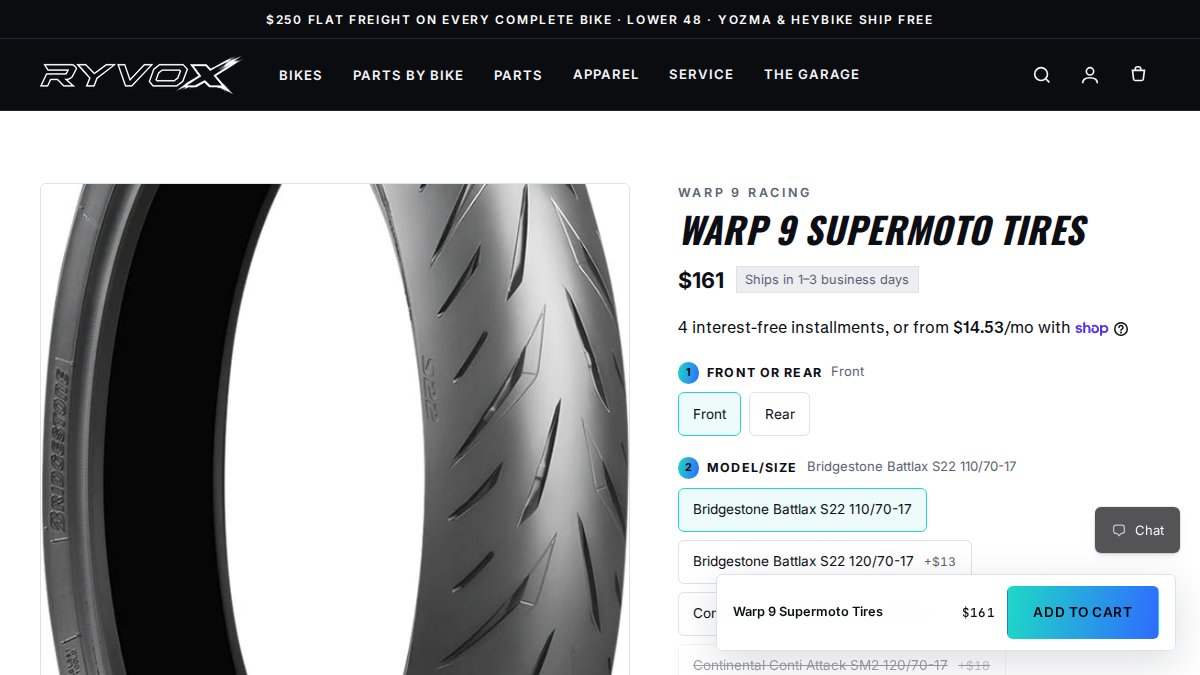
Warp 9 Supermoto Tires are purpose-built DOT tires that prioritize dry traction and cornering stability over mileage, ideal if you value confidence in the twisties over tire longevity.
The Bridgestone Battlax S22 offers fast warm-up and excellent wet grip. The Continental ContiAttack SM2 features a stiffer carcass for very high dry grip and extreme lean angle capability. Both come in front sizes (110/70-17 and 120/70-17) and rear sizes (140/70-17, 150/60-17, 160/60-17, 160/70-17).
What Makes Warp 9 Stand Out
Warp 9 tires fit any 17-inch supermoto wheel set and are sold individually, so you can run different front and rear compounds. The contact patch and sidewall stiffness deliver feedback that tells you exactly where the grip limit is.
A radial carcass handles heat cycling better than bias-ply, keeping grip consistent through sustained cornering and preventing unpredictable mid-corner moments.
Best For
Riders who prioritize grip and lean angle over tire wear. If you're carving canyons regularly and don't mind replacing tires every 3,000 to 5,000 miles, Warp 9 tires deliver uncompromising performance.
Shinko 740/741: Street-Legal Durability and Wet Weather
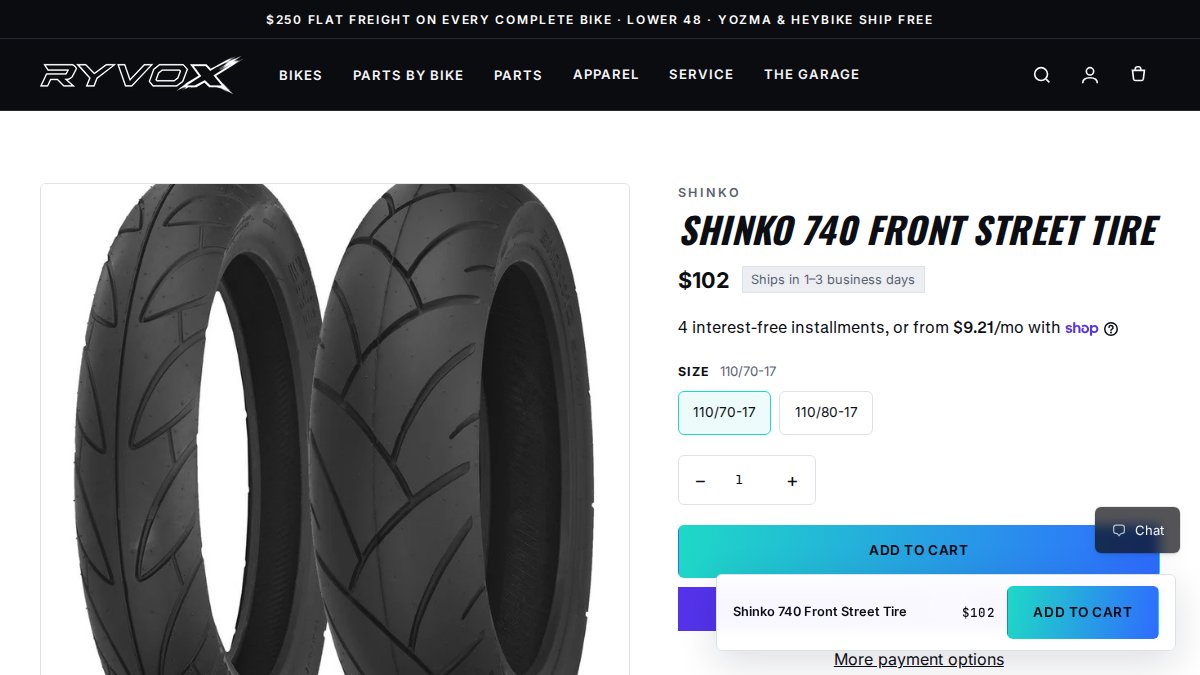
The Shinko 740 (front) and 741 (rear) are 4-ply rated, tubeless DOT tires with a tread pattern engineered to efficiently disperse water in wet conditions.
Speed ratings come in H (130 mph) or V (149 mph). The tread design prioritizes water dispersal for better traction in rain.
Water Dispersal and Commuting
The tread pattern channels water away from the contact patch, reducing aquaplaning risk on narrow sport tires.
These tires warm up faster than aggressive sport tires and are tuned for longevity, delivering more miles before replacement.
Best For
Daily commuters and riders who split time between canyons and street duty. If your bike sees rain regularly or you're not comfortable replacing tires every few months, the Shinko 740/741 is the practical choice.

Supermoto Performance Tire: Value and Quick Replacement
The Supermoto Performance Tire is a street-compound option built for riders who want solid performance without premium pricing. Sold individually at $110.00, it allows quick replacement or compound testing without buying a full set.
Individual Tire Sales
Individual tire sales offer flexibility: run a conservative tire for commuting and swap for an aggressive compound on weekends, or replace only the worn tire.
Best For
First-time supermoto builders and riders testing different compounds without financial risk. The Supermoto Performance Tire delivers respectable dry traction and cornering stability for street use without the aggressive pricing of purpose-built sport rubber.
Factors to Consider When Choosing Supermoto Tires
Selecting the right tire isn't just about grip. Operating temperature, DOT approval, rim width compatibility, and tire pressure tuning all influence how your tires perform on the street. Understanding these factors prevents costly mistakes and keeps your bike feeling planted through corners.
Tire Compound and Grip Levels
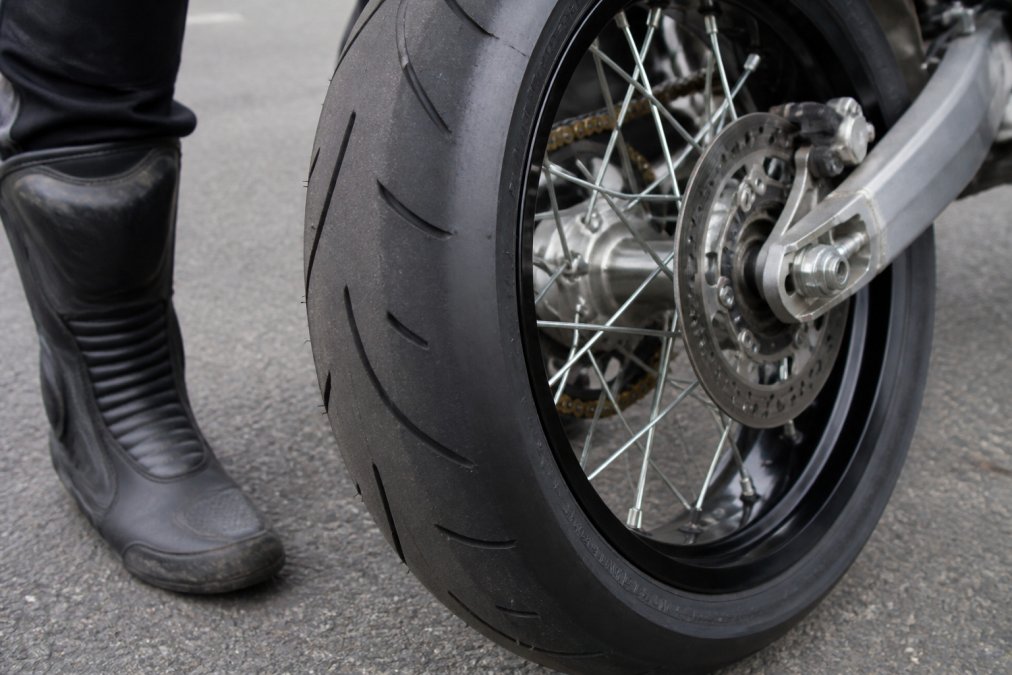
Softer compounds grip better at lower temperatures but wear faster. Harder compounds last longer but require higher operating temperatures to deliver full grip.
Warp 9 Supermoto Tires →
Warm-Up Time and Operating Temperature
How quickly a tire reaches optimal grip is critical on street bikes. On the street, you need grip immediately; you might enter a corner before the tire reaches operating temperature.
The Bridgestone Battlax S22 warms up faster than most sport tires. The Continental ContiAttack SM2 takes longer to reach peak grip but delivers higher grip once warm. Choose based on your riding: fast warm-up matters for cold mornings, peak grip for aggressive riding.
DOT Approval and Street Legality
DOT approval proves the tire meets federal standards for tread depth, sidewall integrity, and speed rating. Every tire in this guide is DOT-compliant for legal street use.
Rim Width Compatibility
Supermoto conversions typically run 17-inch rims with specific widths. Tire sidewall stiffness changes with rim width, so a tire designed for one width behaves differently on another.
Dry Traction and Cornering Stability
Dry traction is grip accelerating out of corners. Cornering stability is how the tire maintains contact through sustained lean. Warp 9 tires prioritize both.
Supermoto Tire Pressure Guide for Street vs. Canyon
Tire pressure is where most riders leave performance on the table. The sidewall pressure recommendation is a starting point, not gospel. Street riding and canyon carving require different pressures because the riding style changes how the tire loads.
Street Commuting Pressure
For street commuting, run tire pressure at or slightly above the sidewall recommendation. Higher pressure reduces rolling resistance and tire heat, extending tire life.
The tradeoff is slightly less grip and feedback. On smooth urban streets, that's acceptable. On rough pavement, higher pressure can make the ride feel harsh because the tire absorbs less impact. Start at sidewall spec and increase by 2 psi if you want more range. Monitor how the bike feels through corners, if you lose confidence, drop pressure back down.
Canyon Carving Pressure
For aggressive canyon riding, drop pressure by 2 to 3 psi below sidewall spec. Lower pressure increases the contact patch, which improves grip and cornering stability. It also increases feedback, you feel the pavement more clearly, which helps you modulate lean angle precisely.
Lower pressure generates more heat, especially during sustained cornering. Heat cycling stresses the tire carcass, which is why you can't run low pressure all day without consequences.
Pressure Monitoring and Adjustment
Check tire pressure before every ride. Temperature changes affect pressure, a tire that's 32 psi at 50 degrees might be 35 psi at 80 degrees. Pressure changes grip characteristics, so consistency matters.
Supermoto Tire Wear and Maintenance
Tire life depends on compound, riding style, and maintenance. An aggressive rider on a soft compound tire might get 3,000 miles. A conservative rider on a harder compound could stretch 8,000 miles. Maintenance practices, especially heat cycling management, directly influence how long tires last.
Heat Cycling and Tire Carcass Durability
Heat cycling is the repeated heating and cooling of the tire during and after riding. Each cycle stresses the carcass, the internal structure that holds the tire together. A tire that's overheated repeatedly (from sustained high-speed riding or low pressure) will fail sooner than one that's managed carefully.
Tread Wear Inspection and Replacement
Inspect tread depth monthly. Inspect tread depth monthly.
Don't wait until you're at the legal minimum.
Uneven wear patterns indicate pressure problems or suspension issues.
Cost-Per-Mile Analysis
Calculate cost-per-mile to understand the true expense of different tires. A $161 Warp 9 tire lasting 3,000 miles costs about $0.054 per mile. A $110 Supermoto Performance Tire lasting 5,000 miles costs about $0.022 per mile. The cheaper tire wins on cost-per-mile, even though the Warp 9 delivers superior grip.
Frequently Asked Questions
What are the best supermoto tires for street riding?
The best supermoto tires for street riding balance grip, warm-up time, and durability. Warp 9 Supermoto Tires ($161) offer maximum lean angle and dry grip for aggressive canyon carving. Shinko 740/741 tires ($102-$103) excel in wet weather with tread patterns designed to disperse water efficiently. Supermoto Performance Tires ($110) provide value for daily commuting. Your choice depends on whether you prioritize track-like performance or street-legal durability and wet grip.
What tire pressure should I use for street supermoto riding versus canyon carving?
Street commuting typically runs at or slightly above the sidewall recommendation to balance comfort and tread wear. Canyon carving demands lower pressure to increase the contact patch and improve cornering stability at higher lean angles. Always verify your tire's sidewall pressure rating and adjust based on ambient temperature, since operating temperature changes pressure. Start conservatively and increase pressure if you notice excessive wear or instability.
How often should I replace supermoto tires for street use?
Street supermoto tires typically last depending on compound, pressure tuning, and riding style. Inspect tread depth monthly; replace if you notice flat-spotting from heat cycling.
What is the difference between DOT-approved street tires and track slicks for supermoto?
DOT-approved street tires have tread patterns designed to disperse water and are legal for road use; examples include Shinko 740/741 and Warp 9 options. Track slicks have no tread and are illegal on public roads but offer maximum dry grip and minimal warm-up time on closed courses. Street tires sacrifice peak grip for wet-weather safety and longevity. For commuting and canyon riding, choose DOT-approved rubber. Reserve slicks for track days only.